
Temple of Dendera – Egypt’s Best-Preserved Temple and Sanctuary of Hathor
Introduction
Sixty kilometers north of Luxor, on the west bank of the Nile near the town of Qena, stands one of the most extraordinary monuments of ancient Egypt – the Temple of Dendera. Dedicated to the goddess Hathor, this sprawling complex is widely recognized as the best-preserved temple in the country and offers visitors a rare glimpse into ancient Egyptian civilization in full color.
Unlike the familiar monuments of the New Kingdom at Karnak and Luxor, Dendera was built during the twilight of Egyptian pharaonic civilization, yet its remarkably vivid reliefs, intact ceilings, accessible crypts, and climbable roof make it an experience unlike any other. This is the only major Egyptian temple where visitors can still see original painted colors on the walls, descend into decorated underground chambers, and walk across the roof to a chapel that once held the famous Dendera Zodiac – the original of which now resides in the Louvre Museum in Paris.
Historical Background – From the Old Kingdom to the Roman Emperors
The history of Dendera as a sacred site stretches back over 4,000 years. Archaeological evidence suggests that a temple existed on this location as early as the Old Kingdom, with references to the site dating to the reign of King Pepi I of the 6th Dynasty (circa 2325 BCE). The oldest existing structure from the earlier eras, a monument built by Nectanebo II around 345 BCE, is no longer in situ, but the site's continuity as a place of worship is undeniable.
The magnificent Temple of Hathor that stands today was constructed primarily during the Ptolemaic Period (332–30 BCE), a dynasty of Greek origin that ruled Egypt after the conquest of Alexander the Great. Construction likely began around 125 BCE and continued through the reigns of Ptolemy XII (father of the famous Cleopatra VII) and Ptolemy XIII. The temple was eventually completed under the Roman emperors, with the famous astronomical ceiling of the hypostyle hall created during the reign of Tiberius (14–37 CE), and the monumental gateway added by Trajan and Domitian.
One of the most intriguing and enduring mysteries of Dendera is its Dendera Zodiac, a stunning astronomical map carved on the ceiling of a rooftop chapel dedicated to Osiris. This remarkable artifact has captivated historians, archaeologists, and astrologers since its discovery. For a deeper exploration of its secrets, you can read more in "The Dendera Zodiac: Unveiling Ancient Egypt's Celestial Masterpiece" (link available on request).
The late construction date of Dendera actually works to its advantage. Because the temple was built near the end of the pharaonic tradition, it incorporates centuries of architectural refinement and, crucially, was not subjected to centuries of looting or reuse that destroyed earlier temples. The result is a monument that reveals exactly what a fully functioning Egyptian temple looked like when the ancient religion was still actively practiced.
Hathor – The Goddess of Love, Music, and the Sky
The temple is dedicated to Hathor, one of the most beloved and versatile goddesses in the Egyptian pantheon. She was the goddess of love, beauty, music, joy, motherhood, fertility, and the sky – a range of attributes that made her central to the daily lives of ancient Egyptians. Her main cult center was at Dendera, where the temple served as a pilgrimage destination for devotees from across the Mediterranean world.
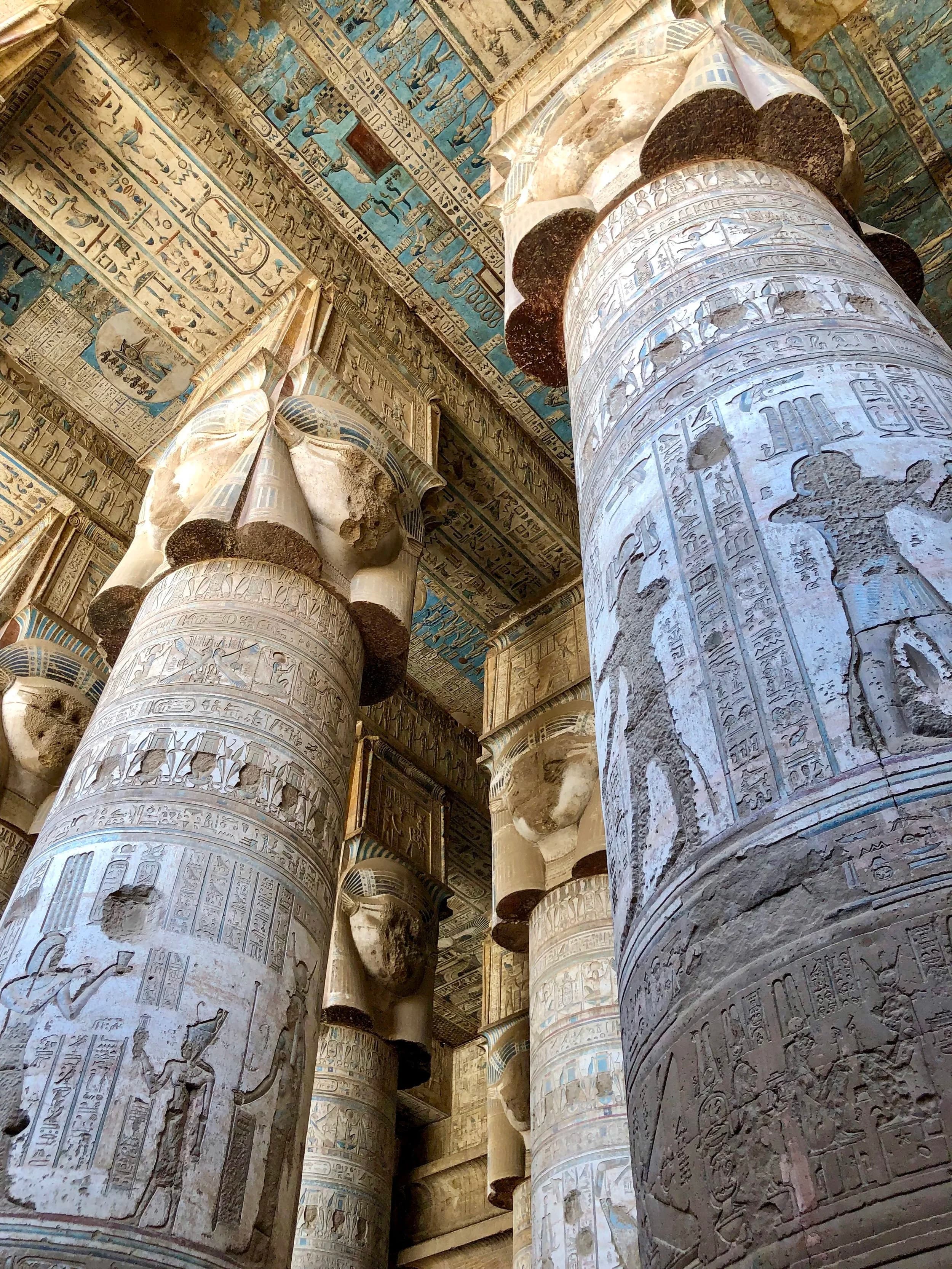
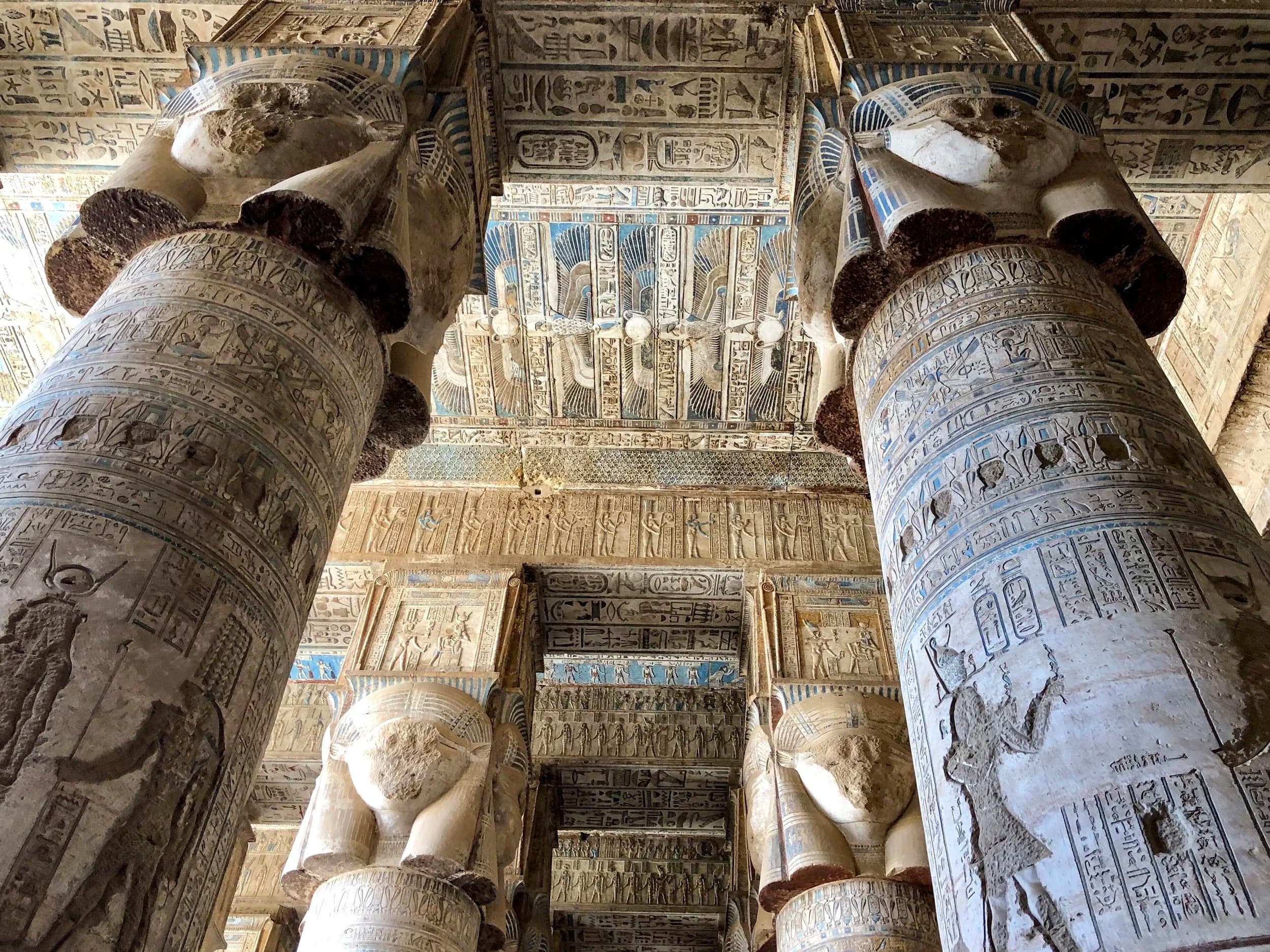
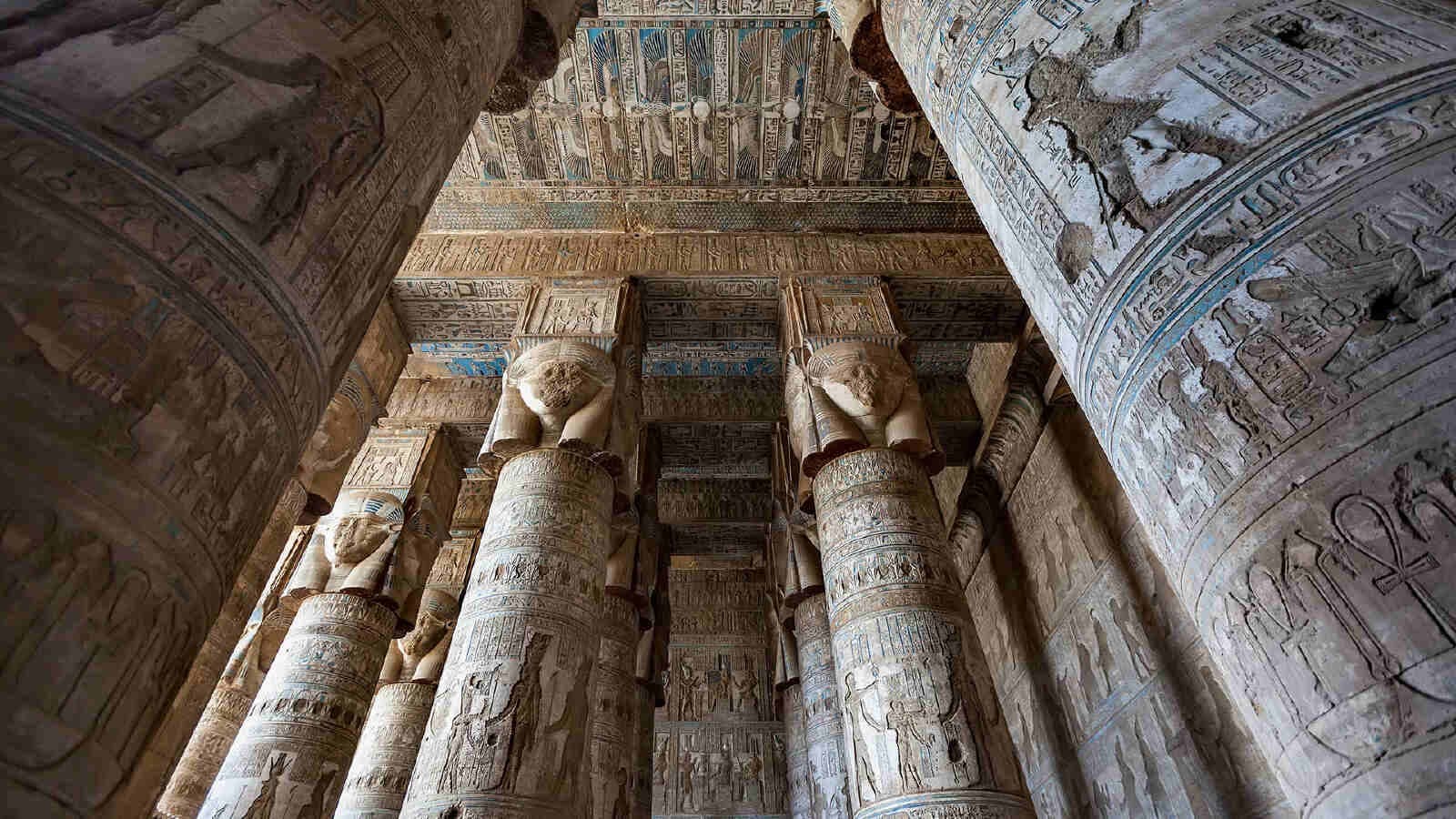
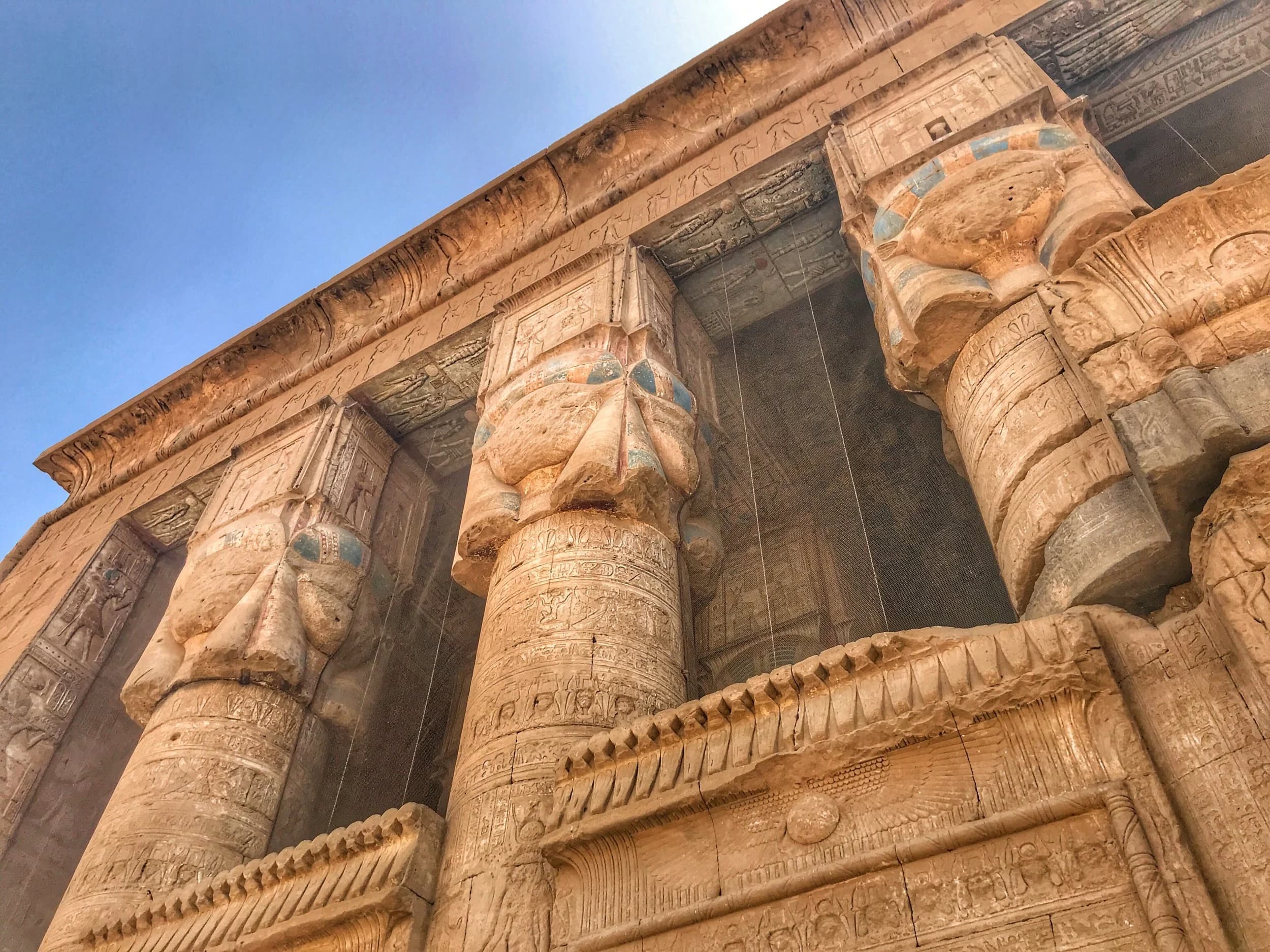
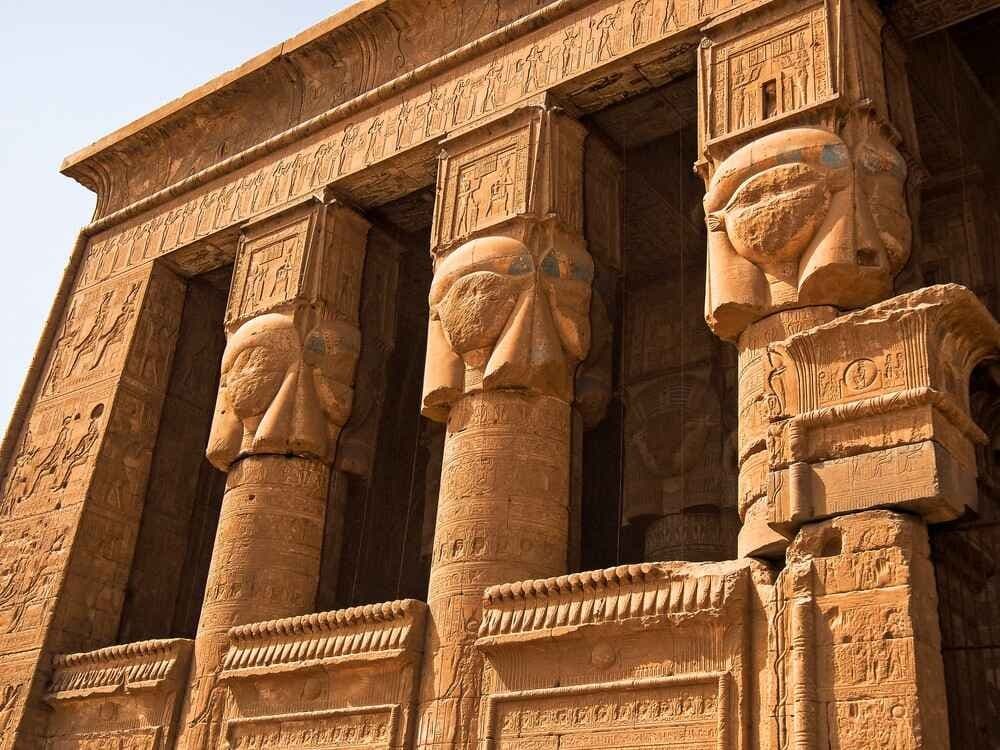
Hathor was most commonly depicted as a cow goddess or as a woman with cow horns, often with the solar disk between them. The famous "Hathor-headed" columns throughout the temple – massive pillars topped with the face of Hathor featuring distinctive cow ears – immediately identify the site's divine patron.
The goddess was closely associated with the sistrum, a musical rattle used in religious ceremonies. Images of sistrums frame the heads of the columns at the temple's entrance, and Hathor's priestesses used this instrument in healing and ritual practices. The temple was also a major healing center, comparable to the Greek sanctuary of Asklepios, complete with a sanatorium where pilgrims could sleep in hopes of receiving healing dreams from the goddess.
Architectural Layout – Following the Divine Plan
The Temple of Hathor follows the traditional Egyptian temple layout but adds unique features that set it apart from any other monument in the country. The complex covers approximately 40,000 square meters and is enclosed by a massive mudbrick wall. The main structures within include:
1. The Hypostyle Hall
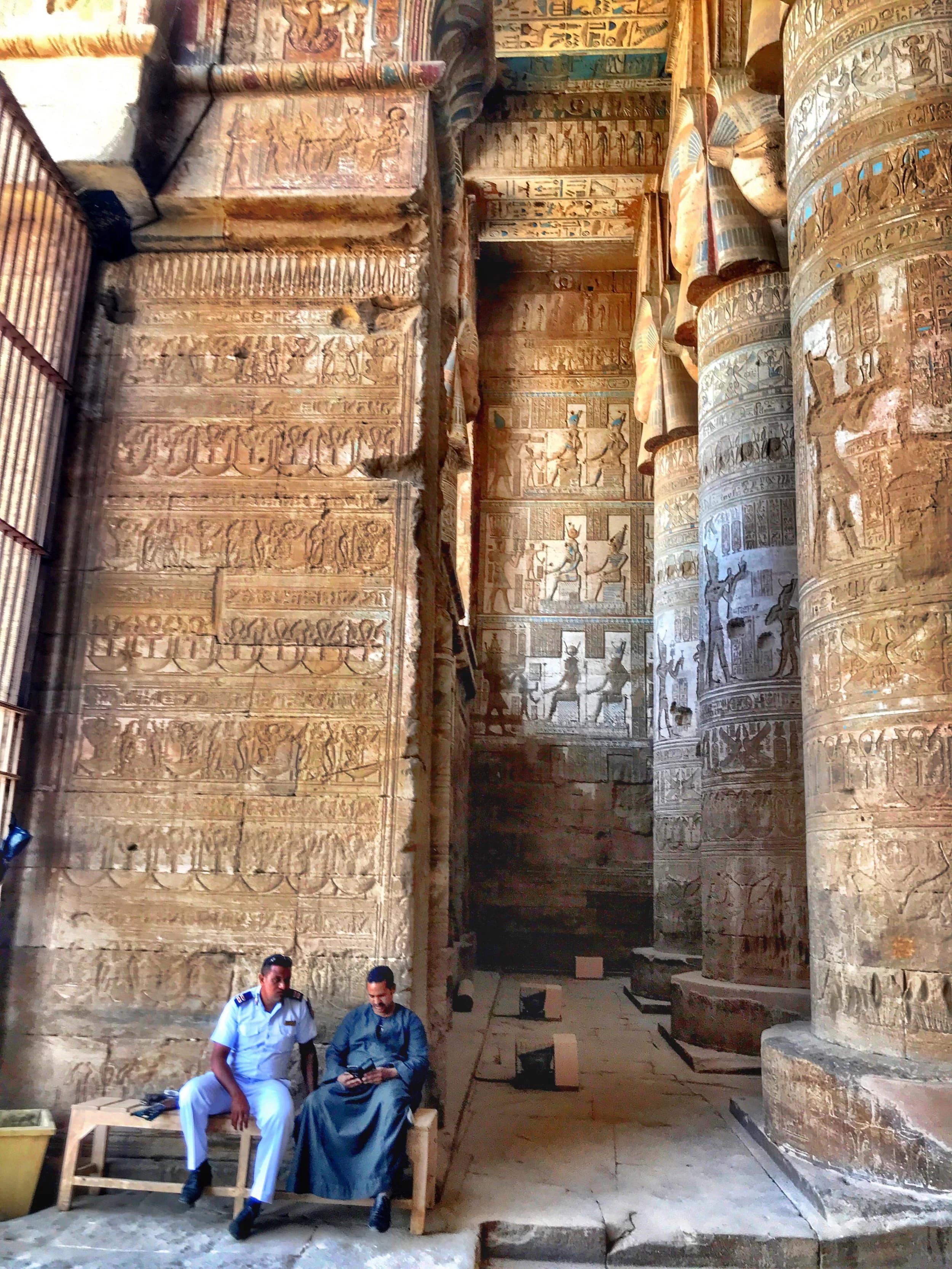
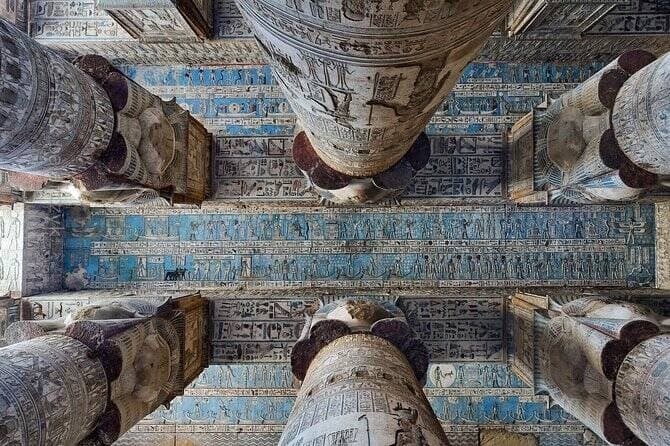
The entrance to the temple leads into a grand hypostyle hall supported by 24 towering columns, each crowned with the distinctive four-faced Hathor capital – the goddess's serene face carved on all four sides. The ceiling of this hall is one of the most celebrated features of the temple, richly decorated with astronomical scenes, zodiac signs, planets, and the sky goddess Nut arched across the heavens. The painted plaster ceiling of the outer hypostyle hall is considered one of the most complete astronomical programs on any ancient Egyptian ceiling.
2. The Inner Sanctuaries and Service Rooms
Beyond the hypostyle hall lies the inner temple, comprising an inner hypostyle hall with six columns, two vestibules, and a series of service rooms and cult chambers surrounding a free-standing sanctuary. The sanctuary at the heart of the temple was the most sacred space, where the statue of Hathor was kept and daily rituals were performed.
3. The Crypts – A Hidden World
One of Dendera's most extraordinary features is its system of underground crypts – three subterranean corridors running beneath the temple's outer walls. Dendera is the only Egyptian temple with fully decorated crypts, and the reliefs found there are among the most unusual and best-preserved in all of Egypt. These chambers were used to store the most precious cult objects, sacred texts, and temple treasures, accessible only to high priests through hidden passages.
Among the most famous reliefs in the crypts is the so-called "Dendera Light," a carving that has sparked endless speculation and debate. The image appears to depict a bulb-like object, though Egyptologists interpret it as a symbolic representation of a lotus flower or a fertility symbol. Accessing the crypts requires a separate ticket, and some passages are narrow, but the experience of seeing these intimate spaces is unforgettable.
4. The Rooftop and Osiris Chapels
Perhaps the most visitor-friendly feature of Dendera is the roof terrace, accessible via a square staircase that once formed part of a processional route. The roof offers spectacular panoramic views of the surrounding Nile Valley and contains several small chapels.
The most significant of these is the Chapel of Osiris, where the famous Dendera Zodiac originally occupied the ceiling. This chapel was used for annual resurrection ceremonies celebrating the death and rebirth of Osiris – a central mystery cult of ancient Egyptian religion. The hieroglyphics here describe the rituals of the Osiris cult in extraordinary detail.
5. The Mammisi (Birth House)
Adjacent to the main temple is a smaller structure known as the mammisi, or birth house, which celebrated the divine birth of Horus, the son of Hathor. These reliefs served to legitimize the ruling pharaoh by connecting their birth to divine lineage.
6. The Sacred Lake and Sanatorium
The complex also includes a sacred lake, now dry but still visible within the enclosure, which was used for ritual purification before ceremonies. Nearby stands the sanatorium – a rare and fully intact structure where pilgrims could sleep, bathe in sacred waters, or take home holy water that had been infused with power by flowing over magical texts.
The Dendera Zodiac – A Masterpiece of Ancient Astronomy
The Dendera Zodiac is arguably the most famous artifact ever found at the temple. This circular bas-relief, carved in sandstone and measuring approximately 2.5 meters in diameter, depicts a detailed map of the night sky. It shows the five planets visible to the naked eye (Venus, Jupiter, Mars, Mercury, and Saturn), two eclipses (one solar and one lunar), and the signs of the zodiac as we know them today, blended with distinctly Egyptian deities and symbols.
The zodiac was discovered in 1799 during Napoleon's expedition to Egypt, and in 1821 it was removed from the temple ceiling using explosives and saws, then transported to France. It now resides in the Louvre Museum in Paris, where the Egyptian government continues to request its repatriation alongside other iconic artifacts such as the Rosetta Stone. A high-quality replica has been installed in its original location at Dendera, allowing visitors to understand the artifact in its original context.
The dating of the zodiac has been a subject of scholarly debate. Two astrophysicists have dated the particular configuration of planets and constellations depicted to between June 15 and August 15, 50 BCE. The presence of both solar and lunar eclipses exactly where they would have occurred at that time supports this dating. The zodiac reflects the fusion of Egyptian, Babylonian, and Greek astronomical traditions that occurred during the Ptolemaic period, marking a unique moment in the history of science.
One astrophysicist has described the Dendera Zodiac as a "Rorschach test," because people bring their own preconceived notions to its interpretation and see what they want to see. What is certain, however, is that the ceiling on which it was carved is larger than the ceiling of the Sistine Chapel and meticulously encoded with sophisticated astronomical knowledge.
Unique Artistic Preservation – Egypt in Full Color
What truly sets Dendera apart from almost every other Egyptian temple is the extraordinary preservation of its original colors. After 2,000 years, the vivid turquoises, ochres, and lapis blues remain visible on walls and ceilings, allowing visitors to see ancient Egypt not as monochrome stone but as a vibrantly painted world.
The reliefs throughout the temple are executed with remarkable precision and detail. The exterior walls include large-scale depictions of pharaohs and Roman emperors – including a famous relief of Cleopatra VII and her son Ptolemy XV (Caesarion) – making offerings to the gods, demonstrating how Egyptian religious traditions continued under foreign rulers.
Practical Visitor Information
Location: Qena, Upper Egypt, approximately 60 km north of Luxor (about 1 to 1.5 hours by car)
Opening Hours: Daily, 7:00 AM to 5:00 PM (hours may extend to 5:00 PM in summer)
Entry Fees (2025): Standard ticket: 300 to 400 EGP (varies by source); Crypts access: additional approximately 100 EGP; Roof access: additional approximately 100 EGP
Best Time to Visit: October to April (mild weather). Arrive early (8:00 to 9:00 AM) to avoid the main tour bus crowds.
Time Needed: 1.5 to 2.5 hours minimum; 3 hours recommended for a thorough exploration including crypts and roof.
Photography: Permitted (no flash inside to protect the ancient pigments)
The site is stroller accessible but not wheelchair accessible due to uneven surfaces and staircases. It is located off the main tourist routes, meaning crowds are significantly smaller than at Karnak or Luxor Temple – a rare and precious advantage in Egypt's busy tourism landscape.
Conclusion
The Temple of Dendera is not merely one more stop on an Egyptian itinerary – it is a destination in its own right. The combination of its exceptional state of preservation, accessible crypts and roof, vivid original colors, and fascinating astronomical ceiling makes it arguably the most rewarding temple experience in all of Egypt.
For those who have wondered what the ancient Egyptians actually saw when they entered their holy places, Dendera provides the answer. The columns still stand. The ceilings survive. The reliefs are clear. In some places, even the colors remain so vivid that you might think the painters finished their work yesterday.
Whether you are a history enthusiast, a lover of mythology, a photographer seeking extraordinary images, or simply a traveler who wants to step beyond the usual tourist circuit, Dendera Temple awaits – a monument to Hathor, goddess of joy, preserved across two millennia of history.
Written by
Egypt Tour Team
You Might Also Like
 Egypt17 min
Giza Pyramids , Sphinx and Grand Egyptian Museum
Giza Pyramids, Sphinx, and Grand Museum Itinerary Guide Key Highlights This guide helps you plan a smooth day tour covering the Giza Pyramids, the Gre...
 Egypt tours3 min
Discover 10 Best Egypt Tours for Your Next Adventure
Explore the 10 best Egypt tours, from the GizaPyramids and a Nile cruise to the Red Sea and desert safaris. Find the right package foryour travel styl...
 Siwa Oasis7 min
Siwa Oasis Egypt: Salt Lakes, Desert Safari and the Temple of the Oracle
Siwa sits roughly 50 kilometres from the Libyan border, deep in Egypt's Western Desert, and it does not feel like anywhere else in the country. There ...
Tours You Might Like

Abu Simbel Temples Day Trip
Witness Ramesses II's greatest architectural achievement — two massive rock temples carved directly into the mountainside 3,200 years ago. The sheer scale and artistry will leave you speechless.

Luxor West Bank
Journey to the ancient necropolis of Thebes on a West Bank tour. Explore the magnificent Valley of the Kings, where pharaohs like Tutankhamun were buried. Marvel at the terraced Temple of Hatshepsut, Egypt's powerful female ruler, and stand in awe before the towering Colossi of Memnon. A half-day immersion into Egypt's afterlife mysteries.

Aswan Private Day Tour
Discover the best of Aswan in one private day with this all-inclusive tour. Visit the iconic Aswan High Dam, the ancient Unfinished Obelisk, and Philae Temple on Angilika Island with a professional Egyptologist guide. Includes private air-conditioned transport, entry tickets, and a local lunch.